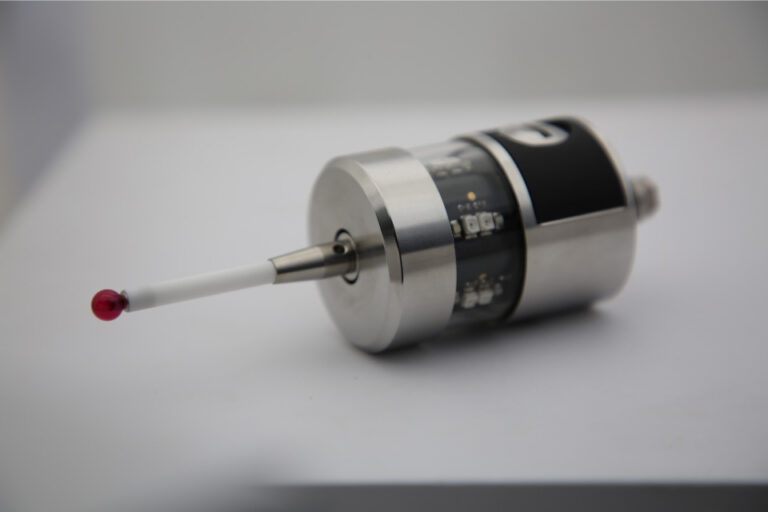
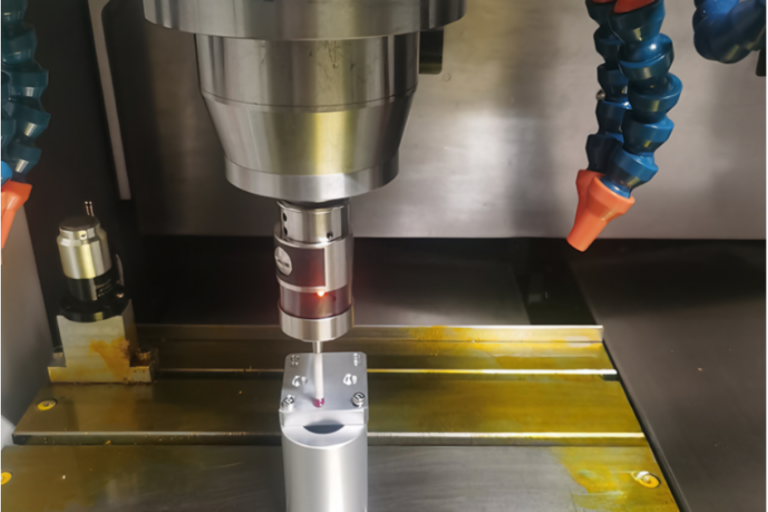
Talk to us,Get a Solution in 20 minutes
Please let us know any requirements and specific demands,then we work out the solution soonest and send back it for free.
Please let us know any requirements and specific demands,then we work out the solution soonest and send back it for free.
If a touch probe is your machine’s “sense of touch” for the part, a tool setter is the machine’s “sense of touch (or sight)” for the tool.
A tool setter (also called an on-machine tool measuring system, tool touch probe, or tool presetter) is a device installed inside a CNC machine that measures cutting tool geometry—primarily length (Z) and often diameter/radius (X/Y) and then updates tool offsets automatically. Many tool setters also support broken tool detection and tool-condition checks so the machine can stop, alarm, or switch to a sister tool before scrap happens.https://cnc-probe.com/cnc-tool-setter/
Think of it as your CNC’s way of answering two questions reliably, every time:
“Where is the tool tip really, right now?”
“Is this tool still healthy enough to cut the next feature?”
Tool setting isn’t glamorous—but it’s one of the biggest hidden sources of machining error.
Even if your CAM is perfect, the tool can still be wrong because of:
A slightly different stick-out after a tool change
A chip trapped on the taper or holder face (runout + length error)
Gradual wear shortening the effective cutting length
Thermal effects that change tool and machine dimensions during a long run
The wrong tool loaded in the wrong pocket (or an offset typo)
Renishaw describes tool setting as measuring tool dimensions/condition on the CNC and highlights that unmonitored tool errors (wear, incorrect geometry, damage/breakage, runout/installation issues, human error, and thermal effects) can seriously impact part quality.
A tool setter makes those errors measurable and therefore controllable.https://cnc-probe.com/cnc-z-axis-wired-tool-setter-large-strok-one-key-zeroing/
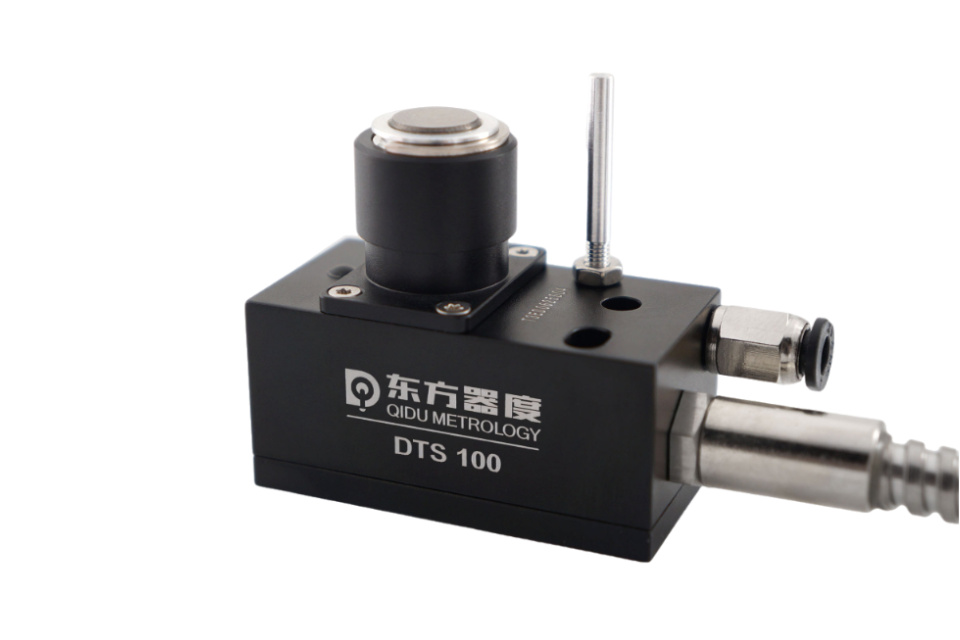
A modern tool setter is typically used for:
The machine brings the tool down to the tool setter’s measuring surface; the moment it triggers, the control records the position and updates the tool length offset.
Some systems can measure diameter (or at least detect significant deviation) by contacting the tool from the side, or by scanning the tool in a non-contact beam depending on the technology. (Contact vs non-contact is a big choice—more on that below.)
If a tool snaps mid-cycle, continuing to cut can silently ruin a part (or a fixture, or a spindle). Renishaw notes broken tool detectors identify whether tools are broken or intact—and on-machine tool setters can often detect breakage as well.
METROL positions tool setters as high-precision touch sensors that help monitor tool condition to prevent defects from wear and thermal displacement, and that automated in-machine measurement improves productivity by eliminating manual setup.
A contact tool setter has a precision sensing surface (pad/button/lever). The tool touches it; the device outputs a signal; the CNC logs the machine position and calculates offsets.https://cnc-probe.com/cnc-z-axis-wired-tool-setter-large-strok-one-key-zeroing/
Why shops love them:
Extremely consistent in messy environments (coolant mist, chips)
Straightforward and robust
Great for length measurement and reliable break checks
METROL emphasizes that direct contact measurement avoids some false detections that can occur with non-contact sensors under coolant/mist, and cites repeatability down to 1 μm for its approach.
A non-contact tool setter measures with a beam (commonly laser). https://cnc-probe.com/cnc-laser-tool-setter-high-precision-non-contact-fast-response/The tool passes through; the system detects presence/edges and can measure diameter, runout trends, and detect chipped edges—often very fast.
Renishaw highlights “advanced laser tool setters” for setting tools, detecting chipped edges, monitoring run-out, and inspecting complex profiles—without risking tool damage during measurement.
Why shops choose them:
Faster checks (useful when cycle time is sacred)
Great for tiny tools and fragile geometries
Capable of more “shape” information than simple touch triggering
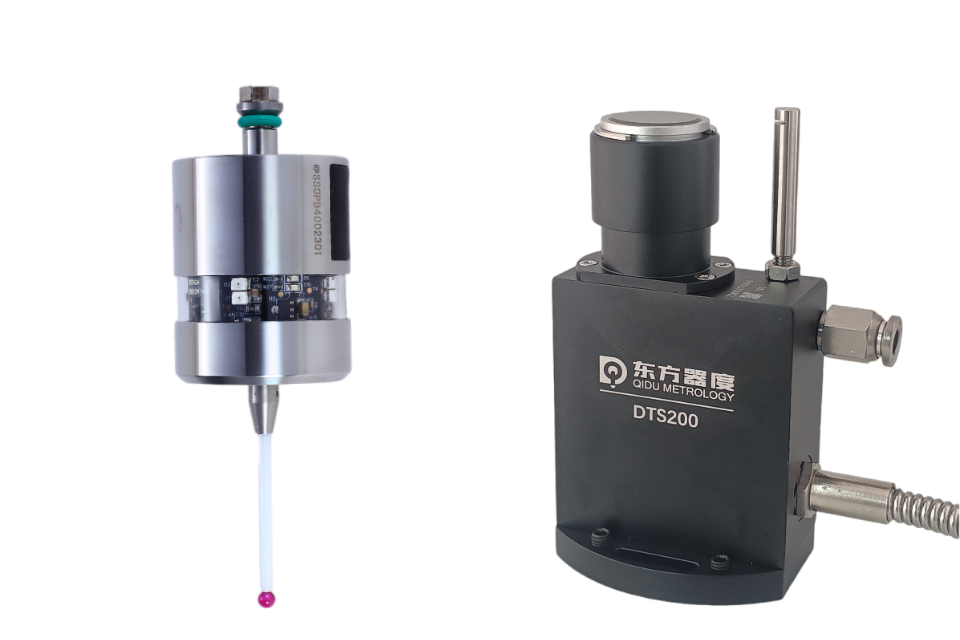
Workpiece touch probe: measures the part (datums, bores, edges).
Tool setter/tool touch probe: measures the tool (length, sometimes diameter).
Offline tool presetter: measures tools outside the machine—useful, but can introduce manual data entry errors and temperature mismatch between bench and machine. Renishaw specifically calls out manual entry risk when measuring on an offline presetter.
A strong modern workflow often uses both:
Tool setter to keep tools honest
Workpiece probe to keep setups honest https://cnc-probe.com/cnc-touch-probes/
Most competitor blogs talk about “accuracy” and “speed” (true but shallow). Here’s the deeper layer: a tool setter stabilizes your machining system against uncertainty.
Every tool change is a tiny gamble. A tool setter turns that gamble into a measurement.
As machines warm, geometry shifts. METROL explicitly links tool setter use to preventing defects from thermal displacement; tool measurement on the machine helps align measurement conditions with cutting conditions.
Broken tools don’t always announce themselves. Renishaw describes broken tool detection as essential because a broken tool can continue machining parts inaccurately into scrap.
The core value isn’t “measurement.”
It’s closed-loop control: measure → decide → correct (or stop).
Tool setters eliminate re-touching tools and reduce operator-dependent variability.
You can schedule periodic checks (every N parts / every tool change / at shift start) and catch drift early.
METROL explicitly calls tool setters “indispensable” for automated operation of CNC machine tools and robots.
This is the use-case where tool setting isn’t just convenient—it’s risk management.
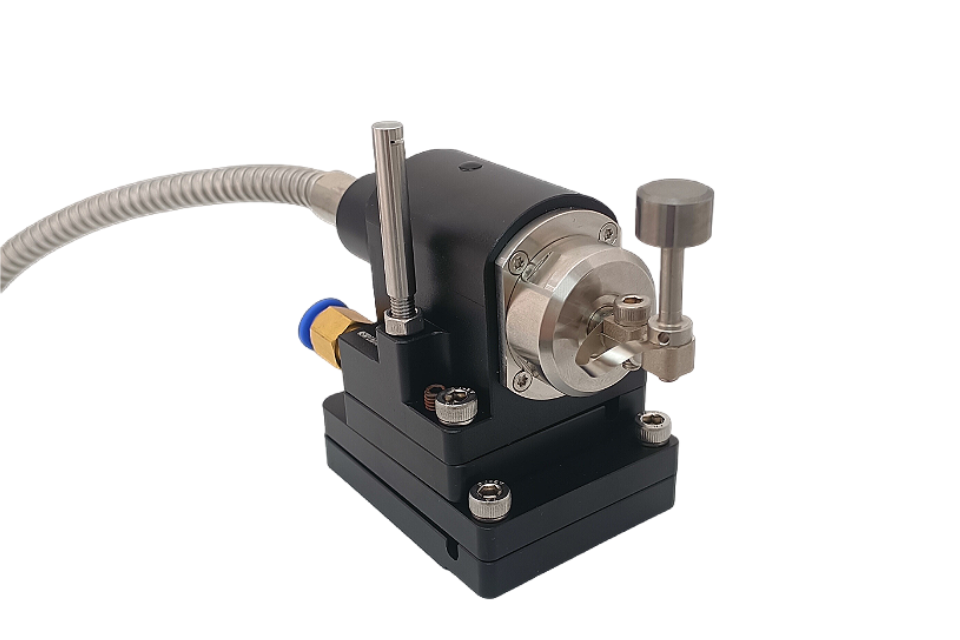
Heavy coolant/mist: Contact tool setters often win for reliability. METROL explicitly notes non-contact sensors can malfunction in mist/coolant conditions and argues contact sensing prevents false positives.
Clean, cycle-time-critical production: Laser systems can be extremely fast and capable.
Length only (most common): Contact is often perfect.
Diameter/runout/chipped edge: Consider laser.
HEIDENHAIN’s tool touch probe lineup points to detecting very small tools (e.g., listed tool diameter thresholds in product specs), which matters if you live in micro drills/endmills.
Renishaw notes their systems are used across milling, turning, and grinding applications—so match the design to your machine format and access.
Here’s a simple, high-impact routine that doesn’t bloat cycle time:
Measure a known “master” tool (baseline)
Measure tools used for finishing ops
Log offsets (optional but powerful for tracking drift)
Measure tool length for tools where Z matters (drills, finish endmills
Run a quick broken-tool check for high-risk tools (small diameters, deep reach)
Verify finishing tool length (and diameter if applicable) to protect tolerance-critical features
This structure mirrors what tool measurement vendors emphasize: measure tool geometry and condition on the machine, update offsets, and run frequent break checks—especially for small tools.
Most ROI talk is vague. Use this simple model:
minutes saved per setup (no manual touch-off, fewer test cuts)
less spindle idle time (HEIDENHAIN explicitly ties tool measurement to shorter idle time and reduced rework/scrap)
one broken tool that ruins a high-value part can pay for a tool setter faster than any “setup time” argument
If you want a shop-floor rule of thumb:
If a single scrap event costs more than a week of probing time, tool setting is already justified.
Dirty contact surface / chips stuck on the pad
Cleanliness is not optional—especially for micron-level repeatability claims.
Measuring with different spindle conditions than cutting
If you measure cold and cut hot (or vice versa), expect drift. That’s why in-machine measurement is positioned as a way to better match cutting conditions.
Not accounting for tool runout / poor seating
Chips on the taper create runout; runout changes effective diameter engagement and can mimic “mystery wear.”
Over-trusting break detection without context
Break detection is powerful, but set sensible thresholds and verify with a known good tool.
A tool setter is more than a convenience device. It’s a process stabilizer: it measures tool geometry and condition on the machine, updates offsets automatically, and helps detect breakage—reducing scrap, rework, and idle time while supporting automation.