Talk to us,Get a Solution in 20 minutes
Please let us know any requirements and specific demands,then we work out the solution soonest and send back it for free.
Please let us know any requirements and specific demands,then we work out the solution soonest and send back it for free.
If you’ve ever blamed your CNC touch probe for “random” measurement errors, there’s a good chance the real culprit is much simpler: the stylus you chose (or inherited) isn’t matched to the job.
Most shops treat ruby ball stylus selection like a footnote: “use 3 mm for small stuff, 6 mm for general.” That’s how you end up chasing tenths that aren’t actually in the machine. The stylus is the first mechanical interface between your part and your probe. It’s where geometry, stiffness, surface physics, and measurement strategy collide.
This guide goes deeper than the usual “bigger = stronger, smaller = more accurate” take. We’ll unpack what really changes when you change ruby ball diameter, how to predict tradeoffs before you cut metal, and how to choose a stylus that behaves the same way your inspection plan assumes.
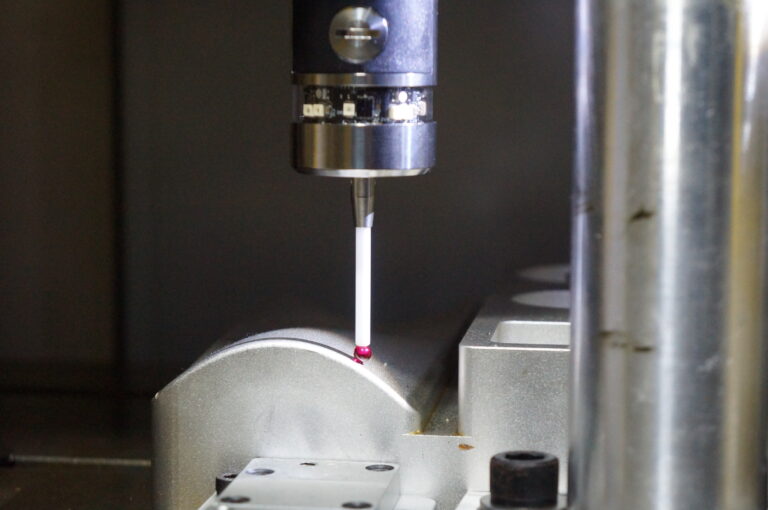
A CNC touch probe stylus is a springy mechanical system:
When you contact a surface, you don’t just “detect a point.” You’re creating a controlled deflection until the probe triggers. The probe reports a position at trigger time, and your control assumes that position corresponds to the surface.https://cnc-probe.com/cnc-probes-stylus/
But between “ball touches surface” and “probe triggers,” several subtle things happen:
Stylus diameter influences every one of those, directly or indirectly.
Smaller balls can reach tight features, but they’re not automatically more accurate.
A smaller ball usually means:
In many real setups, a small ball gives you better access but worse repeatability—especially on-machining probing where coolant, chips, and surface texture are part of life.
Accuracy is less about ball size alone, and more about the stability of the contact event.
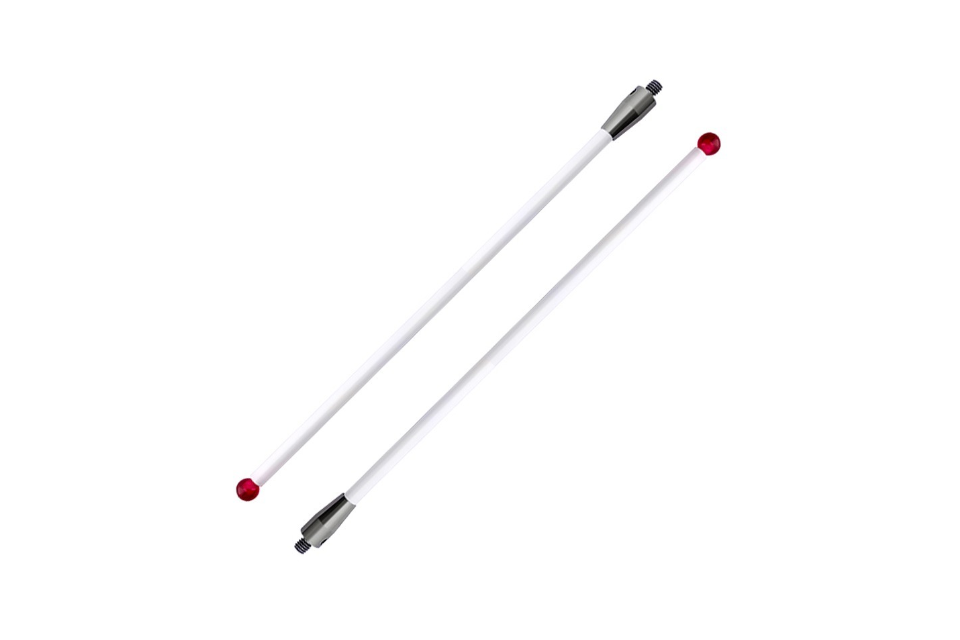
Ball diameter controls what you can physically measure without collisions.
Human shop truth: if your probing routine assumes perfect access but your stylus can’t reach the true surface normal, your measured “point” becomes a guess.
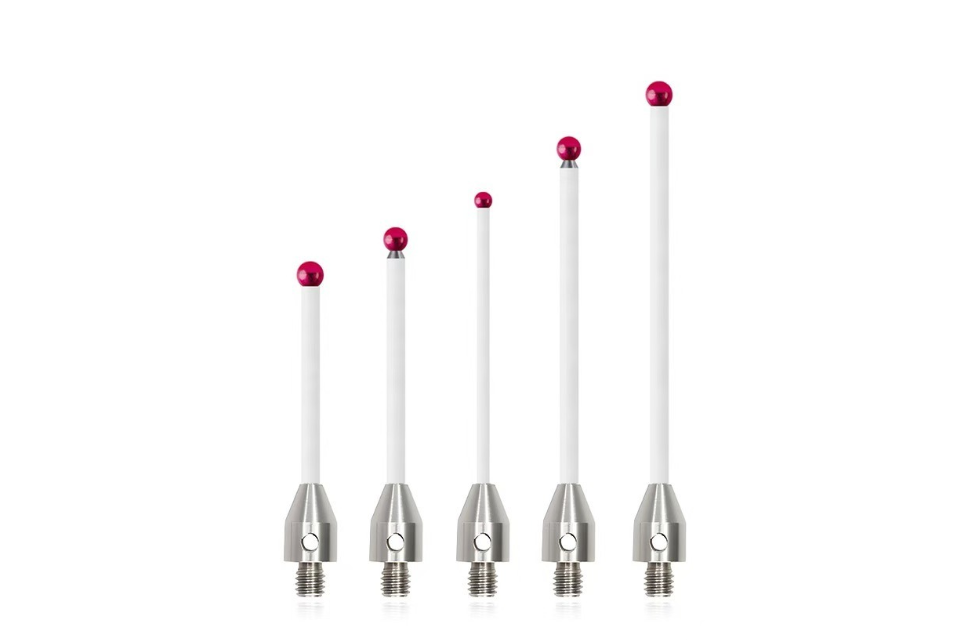
The ball itself isn’t what bends—the stem bends.
But ball diameter influences stem selection and overall stylus length, which changes stiffness dramatically.
Rule of thumb you can trust:
If you need reach, prioritize shorter and stiffer over “small ball = accuracy.”
If you must go small, keep it short and avoid aggressive probing vectors.
Ball diameter changes how “stable” the contact is.
Translation:
If you probe as-machined surfaces (not cleaned inspection artifacts), a slightly larger ball can actually improve real-world consistency.
Ruby is hard and wear-resistant, but not magical.
Smaller balls concentrate force into a smaller contact patch, increasing stress on both the ball and the part’s micro-peaks. Over time:
Large balls spread contact over a larger area, reducing peak stress and making the contact event less “spiky.”
Touch probes have internal mechanics that cause slight differences in trigger point depending on direction. Ball diameter doesn’t eliminate this, but it influences how sensitive your probing is to surface micro-effects that “start the deflection.”
A stable contact event (often helped by a stiffer stylus and appropriate diameter) reduces variability in when that trigger happens.
Shops mix these up:
Ball diameter choices affect #1 and #3 far more than people expect. #2 can often be “calibrated out” only if the behavior is consistent. If the stylus bends differently run-to-run, no calibration can save you.
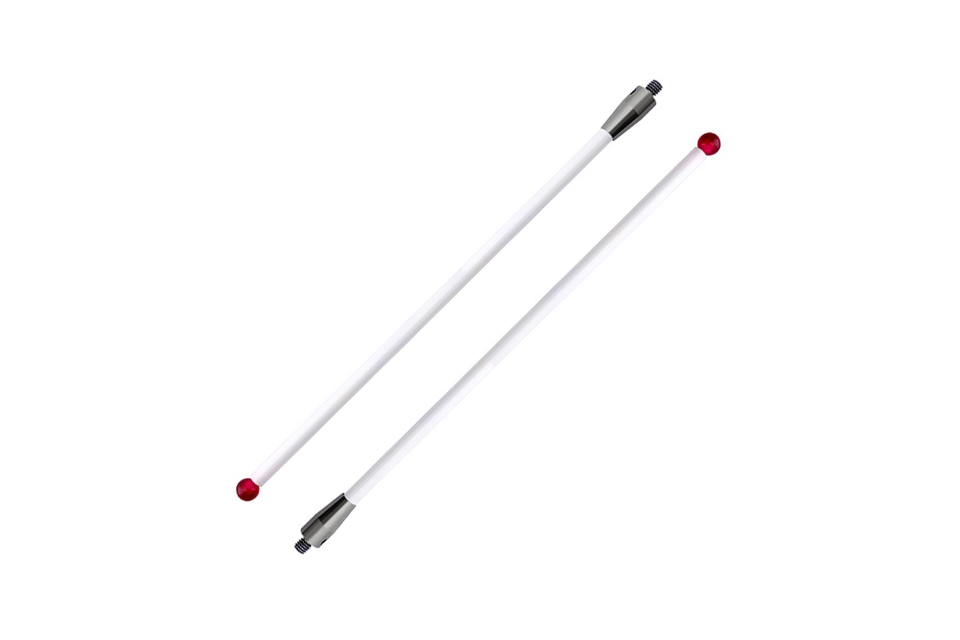
Why this works: good stiffness, decent access, forgiving contact.https://cnc-probe.com/cnc-probes-stylus/
When it fails: deep pockets + long reach + thin stem = “it measures different every time.”https://cnc-probe.com/m4-cnc-probe-stylus-50mm-carbide-stem-and-3mm-ruby-ball-tip/
You may think you need a smaller ball. Often you actually need:
If reach is unavoidable:
This is where bigger truly can mean “more accurate” in practice.
If you probe near edges or chamfers, the ball radius affects where your contact points land.
Two common mistakes:
Fix: program probing points with enough clearance that the ball contacts the intended surface, not a transition feature.
Ask these in order:
If you can reduce stylus length by 20–30%, you often gain more repeatability than changing ball diameter.
A perfect stylus can’t measure through a burr consistently. Deburr critical probe points or adjust contact locations away from burr-prone areas.
Switching stylus diameter without updating calibration is like changing a tool length and ignoring offsets.
On-machine probing is in a hostile environment. Build routines that are robust: controlled speed, consistent direction, and realistic expectations.
If you want a pragmatic starting kit:
Then refine based on the feature access and stiffness demands of your specific parts.
Stylus diameter is not a “bigger vs. smaller” argument. It’s a contact stability vs. access optimization problem.https://cnc-probe.com/cnc-probes-stylus/
If you treat stylus selection like an engineering decision instead of a catalog checkbox, your probe stops being a source of mystery and becomes what it should be: a trustworthy feedback tool inside your machining process.